What Therapy for Creatives Actually Works On
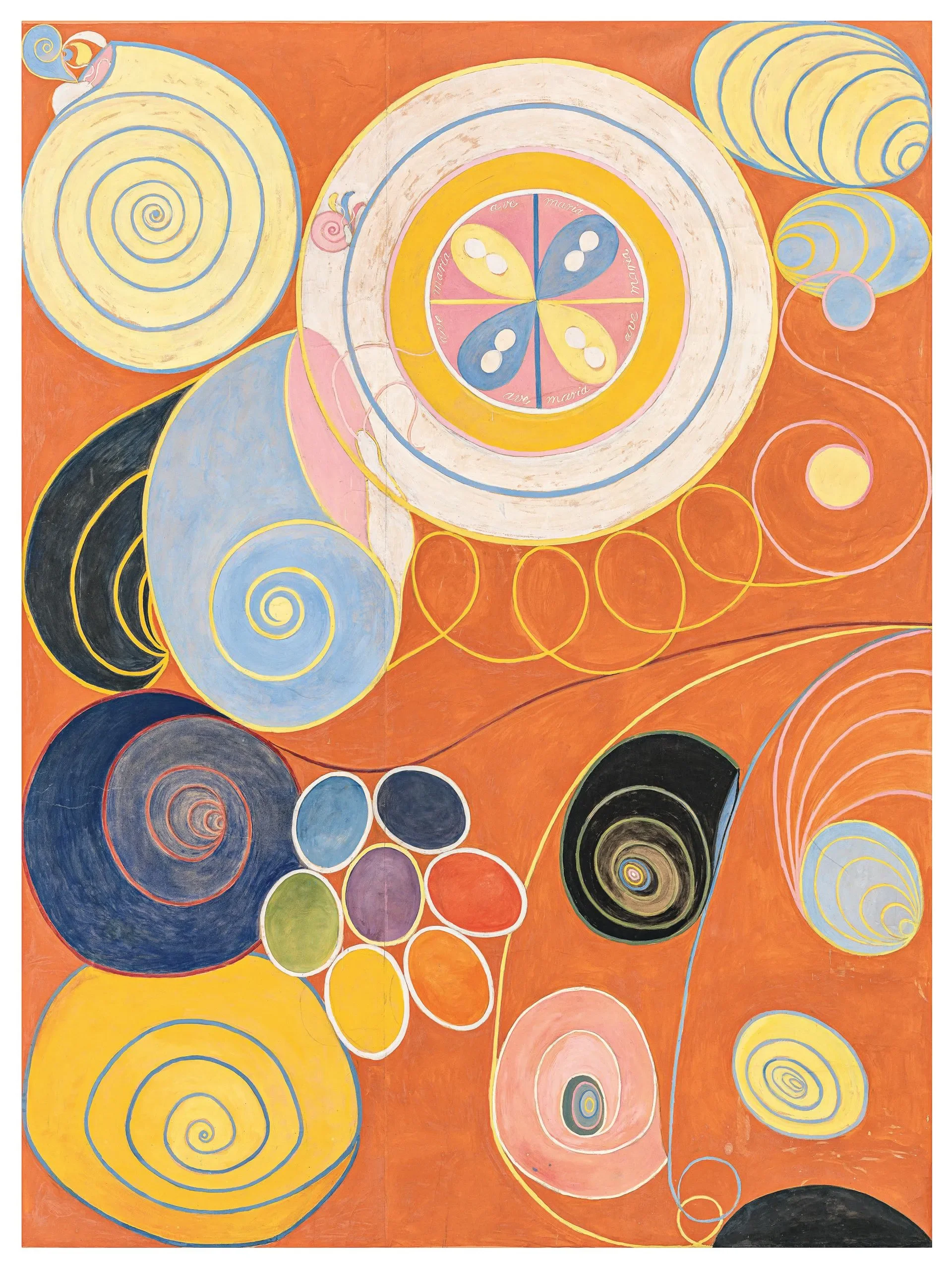
Hilma af Klint. “Group IV, The Ten Largest, No. 3, Youth,” from 1907
Most people assume therapy for artists is about the art. Getting unstuck, finding the muse, recovering the joy.
Some of it is. But the block is rarely the first thing we get to, because the block is usually the last thing in a long chain.
The block is a symptom
When someone can't work, there's almost always a reason underneath that has nothing to do with talent or discipline.
Sometimes it's exhaustion. You've been producing on a deadline for years and the well is empty, and the only solution you've tried is pushing harder. Sometimes it's fear. The last thing you made got a response you're still carrying. Sometimes it's that the work has become the only place your worth lives, which makes every session at the desk a referendum on whether you're worth anything.
A part of you stopped the work to protect you from something. Figuring out what it was protecting you from tends to be more useful than trying to force your way past it.
The unglamorous part: structure and self-care
A lot of the work is less poetic than people expect.
Creative careers destroy ordinary rhythms. Deadlines arrive in clusters. Income is irregular. There's no external structure telling you when to stop, so you don't, and then you crash and lose a week. Sleep, food, and movement become the things that get sacrificed first because they feel optional next to the work.
They aren't optional. They're the infrastructure the work runs on.
So we build systems. Not rigid ones, which never survive contact with a real creative life, but enough structure that your basic needs don't depend on you feeling like meeting them. This is often where people notice change first, because it's concrete and it shows up fast.
The things nobody warned you about
Money. Irregular income does something to a nervous system. Many artists carry a low-grade financial fear that never fully resolves, even in good years, and it shapes decisions in ways that are hard to see from inside it.
Family. A lot of creative people chose a path their family didn't understand, didn't approve of, or actively tried to talk them out of. That conversation doesn't end when you turn thirty. It lives in you as a running argument about whether you made the right call, and it gets louder every time the work goes badly.
The life that looks different. Choosing something outside the standard shape means a constant low hum of comparison. Everyone else seems to have the milestones. You have projects and gaps.
The trauma piece
Many creatives carry some version of complex trauma. Not all, and I'd never assume it. But the pattern is common enough to name.
It tends to look like shame that predates anything specific. Guilt about wanting things. Relationships that repeat in ways you can see but can't interrupt. And underneath a lot of it, the fear of being seen — which is a genuinely brutal thing to carry when your work requires you to show people what's inside you.
Some of it may be why you became an artist. Making things is one of the few ways to be seen on your own terms, at a distance you control. That's not a pathology. It's a solution that works, and it also has a cost.
How IFS fits
I work primarily through Internal Family Systems, and it suits creative work unusually well.
The part that criticizes every sentence before you finish it is a protector. So is the part that refuses to start, and the part that won't let you rest, and the part that needs the work to be perfect before anyone sees it. These parts are usually in conflict with each other, which is exactly why willpower doesn't resolve anything. You're not fighting a bad habit. You're in the middle of a negotiation between parts of yourself with incompatible strategies.
The goal is staying connected to Self. The calm, curious center that can hold all of it without being taken over by any one part. From there, the negotiation goes differently.
We also work on the balance between responsibility and creativity, which most artists are managing badly in one direction or the other — either the responsibilities have eaten everything, or the work has, and both end in the same place.
Your adversity is material
Here's the part I find most worth saying.
The things you've survived are not separate from your work. They're frequently the source of it. And there's a real difference between making art out of unprocessed pain and making art from something you've actually metabolized.
The first is exhausting and tends to produce work that circles the same wound. The second is where range comes from. Claiming your struggles as material rather than being ruled by them is a specific skill, and it's learnable.
What tends to change
More confidence in your voice, which spreads outward into places that have nothing to do with art. Less time lost to the negotiation. A clearer sense of what you actually want to make rather than what you think you should be making.
And often, real relief. Creativity is your greatest gift, and being blocked from it is genuinely painful. Getting access back tends to feel like more than a professional improvement.
The more you know yourself, the more your creative parts have room to work.
I offer therapy for creatives and artists in person in Vancouver, WA and online throughout Washington and Oregon.
Learn more about therapy for therapists and creatives or schedule a free consultation.